
Searching for women’s clothing in Nepal usually starts with one simple question and ends with a long scroll. Is this shop real? Will the fabric feel like it looks in the photo? Does a medium here fit like a medium somewhere else?
What Counts as Women’s Clothing in Nepal?
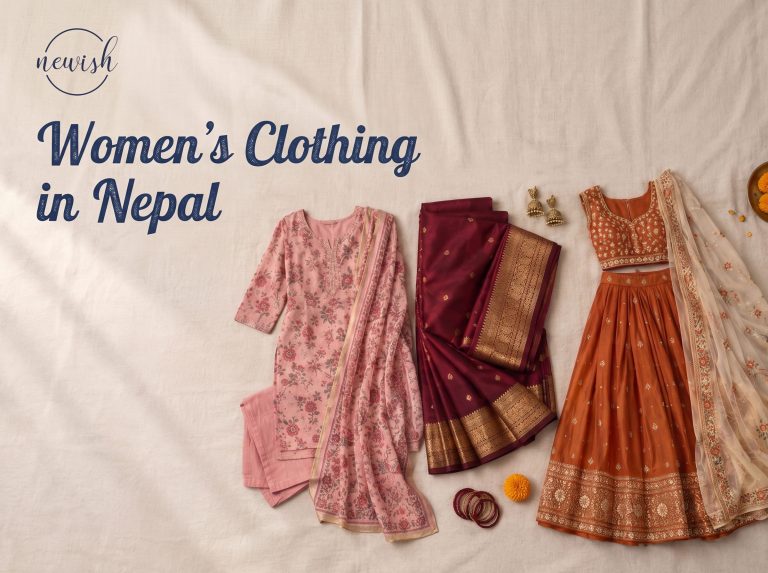
Women’s clothing in Nepal is a mix of traditional and modern styles. A student of Kathmandu will be wearing a kurti made out of cotton along with some jeans on Monday, saree for family puja on Saturday and lehenga for wedding party of his/her cousin in the same month.
Kurtis and kurti sets
The kurti is basically a long tunic which could be knee-length or even longer. The kurti suit is a collection of bottoms worn along with the kurti, and it comes with a dupatta too. It can be worn at school/college, office or even while visiting friends and relatives.
Sarees
Saree is considered to be the most popular attire for Nepalese women. The saree can be seen at festivals like Teej, weddings, pujas, and other official occasions. There are a number of textile traditions in Nepal too, such as Dhaka fabric.
Lehengas
A lehenga consists of an elaborate skirt with a blouse and dupatta. Lehengas are usually used for marriage and engagement parties because their heavy materials and decorations are suitable for such events.
Traditional regional dress
The ethnic communities of Nepal also have their traditional attire. Some of them are the gunyo cholo, the haku patasi worn by Newar ladies from the valley of Kathmandu, and the kurta suruwal that can be comfortably worn in everyday life.
Here is how the three most searched styles compare:
| Style | Best for | Common fabrics | Comfort level |
|---|---|---|---|
| Kurti / kurti set | Daily wear, college, office, festivals | Cotton, cotton-rayon, rayon | High |
| Saree | Teej, pujas, weddings, formal events | Silk blends, georgette, cotton, Dhaka | Medium (depends on draping and blouse fit) |
| Lehenga | Weddings, receptions, engagements | Net, silk, velvet, embellished fabrics | Lower (heavy, for a few hours) |
Why the Right Wardrobe Matters for Girls and Women in Nepal
Clothing here has to work harder than in many other places. It needs to handle the weather, the calendar and your budget.
Climate changes what you buy
Kathmandu Valley has cool winters and mild summers, while the Terai, including places like Butwal and Chitwan, gets hot and humid. Breathable cotton suits the heat, and layering suits the valley’s winter. A wardrobe that ignores this ends up unworn.
Festivals shape demand
Teej, Dashain and Tihar are high points for clothing sales. Red, green and maroon are popular around Teej and Dashain, and people often plan new outfits weeks ahead. Buying early gives you more choice and fewer delivery delays.
One garment often has to do several jobs
Most women don’t want a separate outfit for every occasion. A well-cut kurti set can be worn to a class, then to a family lunch with a different dupatta and jewellery.
Online shopping saves time, if you shop carefully
Buying from home saves travel and lets you compare many options. The trade-off is that you can’t touch the fabric or try it on. The rest of this guide is about reducing that risk.
What to Look For in Quality Women’s Clothing
Product photos can look good on almost any garment, so check the details behind the picture.
- Fabric. Look for clear fabric names such as cotton, cotton-rayon or georgette. Vague listings like “premium fabric” tell you nothing.
- Stitching. Straight seams, finished edges and secure buttons or zips show care in making. Ask for close-up photos if the listing doesn’t have them.
- Fit and size chart. A good shop gives measurements in inches or centimetres for bust, waist, hip and length, not only S, M or L.
- Colour accuracy. Screens change colours. Good sellers show the item in natural light and mention if the shade may look different.
- Print quality. Check whether the print is block, screen or digital, and whether it may fade after washing.
- Lining and transparency. Light cotton and rayon can be sheer, so ask if the piece is lined.
- Care instructions. Reliable sellers tell you how to wash the garment, especially for tie-dye or dyed cotton.
Women’s Clothing in Nepal Online: How Shopping Works
Buying online in Nepal usually follows the same steps at most stores.
Step 1: Browse and Select
Examine some products and select the one that appeals to you. Ensure that it has pictures in plenty, a fabric description, and a measurement guide.
Step 2: Take your own measurements
Take your bust, waist, hips and your preferred length using a measuring tape and measure yourself against the seller’s measurement guide, not your standard size. In case you do not know the size that will best fit you, just ask.
Step 3: Inquire Before Buying
If there are any uncertainties, inquire from the store before buying. It should be clear from the reply if the store owner is responsive.
Step 4: Select the mode of payment
Cash on delivery, bank transfer, and digital wallet options like eSewa and Khalti are among those frequently used in Nepal. You have to check with the seller which payment modes he accepts because every online store has its own preferences. With regard to the first transaction with a new store, cash on delivery minimizes risks.
Step 5: Examine the package and save documents
Open the package carefully and compare it with the listing you ordered. Keep the chat and order information as well. It will take less time to deliver an item within the Valley of Kathmandu.
Ladies Clothes in Nepal With Price: What Affects the Cost
Many shoppers search for ladies clothes in Nepal with price first, and two similar-looking kurtis can cost very different amounts. These factors explain most of the difference:
- Fabric type. Pure cotton, cotton-rayon, silk blends and synthetic fabrics have different costs.
- Work and detailing. Embroidery, tassels, cutwork and printing raise the price.
- Set or single piece. A full kurti set with bottoms and a dupatta costs more than a top alone.
- Origin and production. Imported, locally stitched and handmade pieces are priced differently.
- Seasonal demand. Prices can rise around big festivals, and sales often appear after them.
- Delivery. Some stores include it, while others charge by location.
Price is best checked on each product page, because it changes with stock and offers. At the time of writing, kurti sets on the Newish Fashion Destiny website start from about ₨ 2,500, and current sale items are marked on the site.
Wholesale Women’s Clothing in Nepal: What Resellers Should Check
If you plan to resell clothes, wholesale is a different process from buying for yourself. Before placing a bulk order, ask about:
- Minimum order quantity. Some suppliers require a set number of pieces per design.
- Size and colour spread. Make sure the mix matches your customers, not just what the supplier has in stock.
- Sample policy. Buy one or two pieces first to check fabric and stitching.
- Return and exchange terms. Bulk orders often have stricter rules.
- Consistency. The pieces you receive should match the samples.
Compare at least two or three suppliers before choosing one.
How to Choose the Best Online Clothing Store in Nepal
There is no reliable public ranking of “the best online clothing store in Nepal”, so use a checklist instead. This applies to websites and to shops you find on Instagram.
- Real photos. Original product photos show that the seller actually has the item. Be careful with images that look copied from other websites.
- A clear profile. Look for a working website or profile with an address or contact details and a history of posts.
- Honest descriptions. Fabric, size and colour details should be specific.
- Reachable support. Test it with a question before you order.
- A clear policy. Check for information on exchanges, damaged items and delivery.
- Reviews and comments. Look for real customer comments and photos, and be careful with pages that only show perfect reviews.
Women’s Clothing Across Nepal: Kathmandu, Pokhara and the Terai
Buying habits differ by place.
- Kathmandu and Lalitpur. Shoppers have the most choice and the fastest delivery. Many prefer trying clothes in person for weddings and expensive pieces, but use online shops for everyday items like kurtis.
- Pokhara. Both tourism and local demand shape the market. Comfortable, light everyday wear is popular.
- Butwal, Chitwan and the Terai. Hot weather makes breathable cotton the main choice. Online shopping is especially useful outside the valley, though delivery may take longer, so plan ahead for festivals.
- Delivery and payment. Delivery time and cost depend on the courier and the district. Confirm both before you pay, especially for rural areas.
- Search habits. People often search with local terms such as “online clothes shopping in Nepal Kathmandu” or “Nepal clothing online shop”. Sellers who list their location, delivery zones and payment options clearly are easier to trust.
Common Mistakes to Avoid
- Ordering by usual size alone. Sizes vary between sellers. Compare your measurements with the chart instead.
- Ignoring the fabric name. “Soft fabric” isn’t a fabric. Ask what it is made of.
- Trusting one flattering photo. Look for several angles, ideally in natural light.
- Paying in full to an unknown seller. Use cash on delivery or a smaller first order if possible.
- Leaving festival shopping to the last week. Stock runs out and delivery slows down.
- Skipping the care label. Dyed and printed cotton can bleed or shrink if washed wrongly.
- Not saving order details. Screenshots of the listing and payment help if there is a dispute.
- Choosing by trend only. A style that doesn’t suit your climate or daily life will stay in the cupboard.
Why Shop With Newish Fashion Destiny
Newish Fashion Destiny is a Nepali online store selling women’s clothing, with a focus on kurtis and kurti sets in cotton and cotton-rayon. It also lists new arrivals and sale items for festivals such as Teej.
What you can expect:
- Comfort-focused everyday kurtis. Breathable fabrics suit Nepal’s mixed climate.
- Clear product pages. Listings show the item, fabric and price so you can compare before deciding.
- Festival-ready options. Styles in pinks, maroons and rust tones suit occasions like Dashain and Tihar.
- Direct contact. You can message the shop with questions about size or fabric before ordering.
Practical Tips for Buying Women’s Clothing in Nepal
- Order just one or two items at first. Try out their quality and delivery times before ordering more clothes.
- Keep a size note on your phone. Your bust, waist, hips, and length should be handy to compare the charts fast.
- Order cotton clothes for everyday use. This material is perfect for high temperatures and washes better than others.
- Wash your colored clothes once separately in cool water.
- Purchase neutral dupattas and bottoms. These go with different kurtis, giving you various outfits without spending too much.
- Think about Dashain or Tihar festival outfits ahead of time and order clothes a bit earlier.
- Request videos or additional pictures in case you have any doubts about color or fabric.
- Calculate delivery times for your district prior to paying.
- Save your favorites and wait for promotions, particularly after holidays.
- Iron your clothes on the other side to preserve prints and embroidery.
Frequently Asked Questions About Women’s Clothing in Nepal
What are the most popular types of women’s clothing in Nepal?
Both Kurtis and kurti suits are extensively worn on a regular basis, while sarees are often preferred for festival purposes, and lehengas are used only for wedding occasions. Similarly, traditional dresses like Gunyo Cholo and Kurta Suruwal are also worn for cultural purposes.
How do I buy women’s clothing online in Nepal safely?
Select the vendors who have unique pictures, fabric details and a good means of contacting them. Make inquiries before purchasing any product, and pay using COD for the first order you place in the store.
Which fabric is best for kurtis in Nepal?
Cotton and rayon-cotton are good for most of Nepal since they are breathable and require little maintenance. More heavy fabrics are preferred during winter in the valley area.
How much do ladies clothes cost in Nepal?
Prices are quite diverse depending on the material, details, set, and season. Look at the product pages for current prices because prices do change based on offers. Kurtis at Newish Fashion Destiny can be purchased starting from approximately ₨ 1,200.
Can I find wholesale women’s clothing in Nepal?
Sure, but there are different terms depending on suppliers. Inquire about minimum order quantity, sampling procedure, exchange policy, and size range first.
How do I know a clothing page on Instagram is genuine?
Look for original photos, consistent posting, real customer comments and a clear way to contact the seller. Be careful with pages that avoid answering direct questions about fabric or price.
What should I wear for Teej, Dashain and Tihar?
Red, maroon, green and pink are popular around these festivals. A cotton kurti set with a dupatta is a comfortable choice, and sarees or lehengas are common for formal family events.
How long does delivery take in Nepal?
This depends on the courier and your location. Kathmandu valley area is usually faster than other areas, so you must ask the seller about the time before purchasing.
Final Thoughts on Women’s Clothing in Nepal
Good women’s clothing in Nepal fits your climate, your calendar and your budget. Kurtis cover most everyday needs, sarees suit formal and festive moments, and lehengas belong to big celebrations. Whichever you choose, check the fabric, compare measurements and ask questions before you pay.
Shopping online works best when you take small steps: start with one piece, confirm delivery, and keep your order details. Plan festival outfits early and you’ll have more choice and less stress.
If you’d like to see kurtis and kurti sets chosen for comfort and everyday wear in Nepal, Newish Fashion Destiny can help you find the right size and style.
Browse the collection: newishfashion.com.np
Questions about size or fabric: message us on Instagram before you order.